About Powerhouse Arts
a factory for art & ideas

Powerhouse Arts (PHA) is a not‑for‑profit creative production center in Gowanus, Brooklyn. We bring artists, fabricators, educators, and neighbors together—and connect them to the tools, spaces, and support they need to express themselves and sustain their practices. Every program, rental, and partnership helps fund our creative mission.
Mission
Powerhouse Arts is committed to creative expression. In our purpose‑built facility, an extended network of art and fabrication professionals and educators co‑create, teach, and share practices vital to the wellbeing of artists and the communities to which they belong.
Vision
We envision a society where creative expression is celebrated as central to personal and civic life. Our vision for impact is rooted in three beliefs:
- People → an infinite spring of creativity. In shared spaces of exploration, communities imagine new realities for themselves and their neighbors. We collaborate with individuals and organizations to support the creative lives of New Yorkers.
- Making → a collective practice of possibility. When we make, we experiment, explore, expand, and evolve. Making sparks new possibilities for ourselves and our communities—and ignites transformation.
- Social justice → a daily practice. Culture thrives where justice flourishes. As a creative hive, we foster an environment where people feel inspired and empowered to explore and create within and beyond our walls.
Land Acknowledgement
Powerhouse Arts is located on Lenape land in the Gowanus section of Brooklyn. We honor the Lenape peoples—past, present, and future—and recognize their continuing presence and contributions to this land.
How We Work
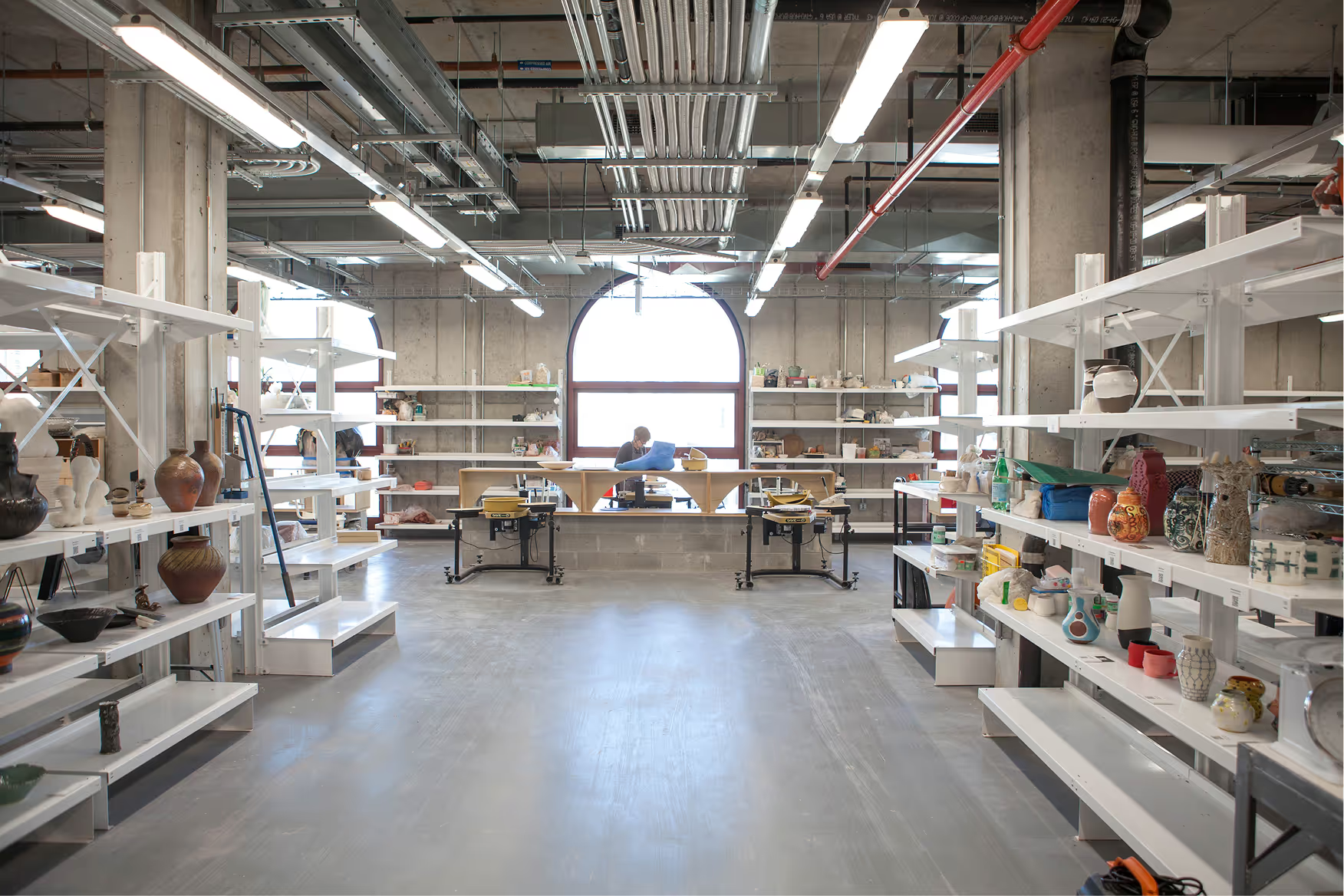
- Fabrication shops: PHA offers fee-based fabrication services in: Ceramics, Print (including screenprinting and digital print services) and Public Art. PHA is also home to The Alpha Workshops, which produces handmade wallpaper and handwoven/hand-dyed textiles, and Workspace11, which specializes in architectural and design metalwork. The organization’s in-house production facilities and expert fabrication teams help artists produce work in a safe environment, in a more collaborative, creative and cost-effective way than typical studio buildings can accommodate.
- Membership studios: The Community Ceramics Studio and MGC Community Print Studio offer artists access to workspace, materials, equipment, and professional assistance.
- Education, engagement, and community-building: PHA is a place where artists can realize projects, find community, and grow opportunities to sustain creative lives. Community members can partner and learn with us through in-person events and gatherings, art-making and skill-building workshops and classes, work-based learning programs, a subsidy program, and an artist-in-residence program. Our educational approach investigates different ways of making, engages participants in creative problem-solving, and supports the actualization of their artistic projects from ideation to completion.
- Artistic programming: We have activated the impressive gathering spaces of our facility with an expanding schedule of exhibitions, art fairs, performances, screening, and talks.
- PHA Store: Our onsite and online retail shop celebrates and supports a unique community of artists, makers, and educators. The spirit of production and unique manufacturing of work speak directly to the ethos of Powerhouse Arts, inspiring an emotional connection and remarkable craft. From Limited Editions to Unique Product Drops, consumers will be able to access specialty products on sale through an e-commerce site, partner collaborations, and our onsite retail boutique.
- Venue Rentals: PHA includes unique venue spaces of different sizes and settings, and operates a Venue Rental program that directly supports the creative mission of the organization. Each space was designed with a range of production needs in mind, resulting in a series of inviting spaces that collectively reimagine the building’s rich history.

Our Facility
A historic power plant, reimagined for creative production. We reimagined a 117-year-old power station as a contemporary art center designed to meet the multidisciplinary needs of today’s artists. The facility allows flexible workshop configurations, dedicated teaching spaces, and places for community gathering and exchange.

Design Overview
Recognized for their experience designing spaces for the arts and adaptive reuse, Herzog & de Meuron, in collaboration with PBDW Architects, designed the Powerhouse Arts facility to reinterpret the historic complex and support the contemporary arts ecosystem. The project is situated along the Gowanus Canal between Red Hook, Carroll Gardens, and Park Slope.
- In 1904, the Brooklyn Rapid Transit Power Station, designed by Thomas Edward Murray, was completed to serve Brooklyn’s expanding transit system.
- Decommissioned in the 1950s, half of the structure—the Boiler House—was demolished, leaving the Turbine Hall standing.
- In the late twentieth century, the site became a destination for local graffiti artists and earned the nickname “the Batcave.”
Today, the design reinterprets the Boiler House, re‑establishing its mass and relationship to the stabilized, preserved Turbine Hall. Historic layers—concrete vaults, brick chases, glazed tile work, and residual graffiti—are integrated with new architectural elements, creating a cohesive, production-ready arts facility.
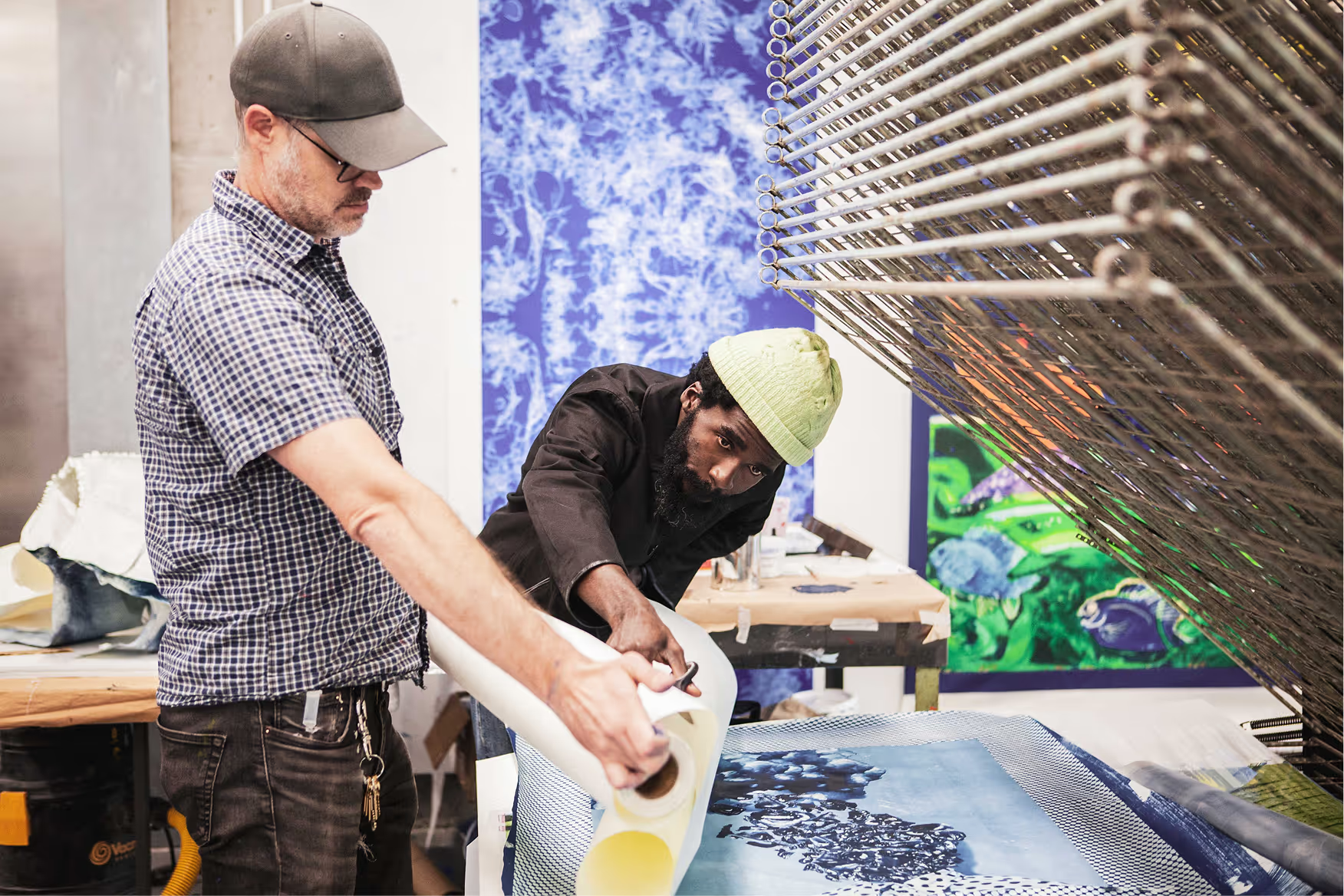
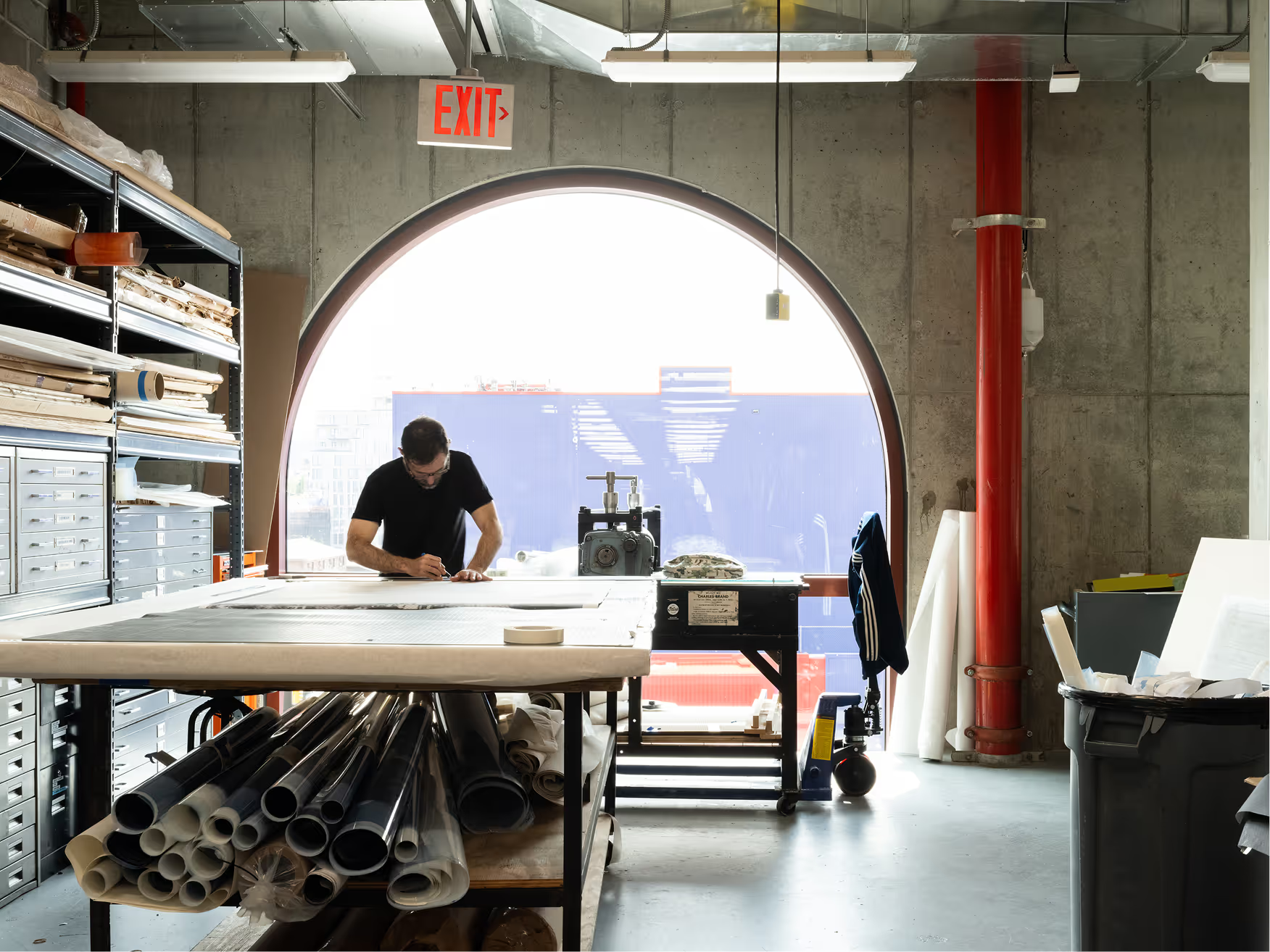
Powerhouse Arts features roughly 85,000 square feet of fabrication shops supporting print, ceramics, and public art production. These shops offer a range of equipment and capabilities in each material and facilitate collaboration across materials. Adhering to the best practices of industrial hygiene and the needs of working artists served by the organization, the fabrication shops are stacked vertically in the reconstructed Boiler House. The disciplines that require the highest ceilings and best access to the loading areas are located on the ground floor, while the disciplines with the most stringent exhaust requirements — are located closer to rooftop extraction units.
%201.avif)
Powerhouse Arts includes multiple venue spaces of different sizes and settings for large scale events, public programs, and community gatherings, and operates a Private Event and Corporate Rental program that directly supports the creative mission of the organization. Each space was designed with a range of production needs in mind, resulting in a series of inviting spaces that collectively reimagine the building’s rich history.
Throughout the design process, Powerhouse Arts, Gemini Arts Initiative, and the wider design team took care to implement a new, unprecedented standard of health, safety, and hygiene for the artists working in the fabrication shops. Extensive consultation with an industrial hygienist, artists, and fabricators was undertaken during the design phase. State-of-the-art fume extraction, dust collection, and particle extraction infrastructure were incorporated into the design of the facility. Compressed air is pumped in and recirculated at a constant rate across the Boiler House structure, which houses the fabrication activities for the organization. Provisions were made to offer multiple eye-wash stations, emergency shower stations, and other contingency resources.
Accessibility played an important role in the acquisition of shop equipment and the development of facility infrastructure. An accessible hydraulic elevator connects the Lobby to the main elevator bay and ADA restrooms are located on each floor. In the shops themselves, several throwing wheels, hand-building tables, and other equipment are wheelchair accessible.
1904 → today
Building History
Highlights from our site’s industrial, cultural, and artistic life:


Board
Laura Hanna
Board Chair
Josh Rechnitz
Founder & Director Emeritus
Board Members
LaToya Ruby Frazier
Christopher Ho
Michael Hurst
Elizabeth Buckley Lewis
Cassie Rosenthal
Tracey Ryans
Dread Scott
“I believe in the redemptive power of art… It broadens our tenuous grasp of the world and our ideas about our place in it.”
— Joshua Rechnitz, Founder and Board Director Emeritus